
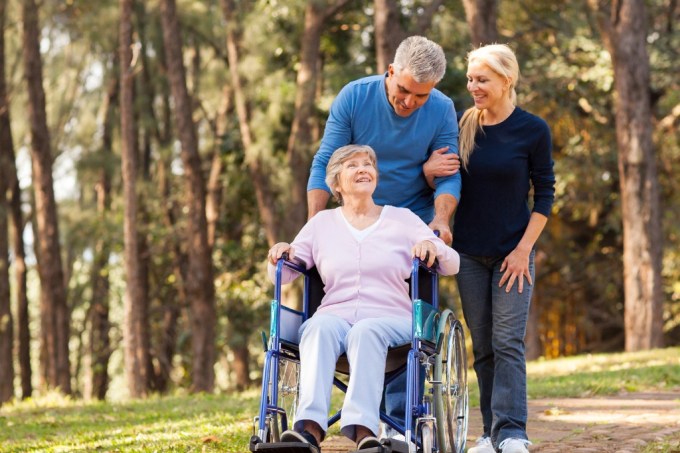
As I talk about Albert’s stroke, rehab, and continuing recovery from his stroke, what to, what not to do, what not to expect and not to expect, know that stroke, and recovering from stroke is different for each person. Know that stroke and recovering from a stroke will be different for each person. Recovery may follow certain steps and milestones, but recovery is individual. Recovery for some people will happen in sequential order, whereas others may improve slowly or not at all.
Before Albert had his stroke, Gina, my colleague Rob’s wife had a stroke. Rob told me the story of Gina’s stroke and I was able to see how the statements above are true.
Rob began by stating that he had struggled with high blood pressure as an assistant principal in the public school system. Because of this, he and Gina were under the assumption that he would be the person who would have a stroke. Gina didn’t have high blood pressure so they cared for and took care of Rob.
It was Saturday morning, the first weekend of Thanksgiving break and Rob was in the kitchen making coffee. Gina walk in and told Rob that she had trouble sleeping the night before so she slept in the guest bedroom. She said that she still wasn’t feeling well and said that she had a huge head and stomach ache and was going to the bathroom.
Rob sat drinking his coffee and waited for Gina to return and get her coffee. When she didn’t arrive, he walked to the restroom and found her on the floor. Her right arm was moving over her head but she was unresponsive. Rob called 911 and they arrived quickly. They didn’t tell him this at the time, but they didn’t expect her to survive the ambulance ride and they didn’t let him ride in the ambulance with her. Rob thought, as an assistant principal, I’ve seen parents approved to ride in the ambulance with their children, why not him.
Learning the nature of her symptoms, after giving her medicine to stop the bleeding in her brain, the doctor told him that she would survive, but it would be a long recuperation.
Rob stated that he thought that Gina would recuperate. He thought that she would get to a point where she would walk, gain muscle control, and use her hand again, but it didn’t happen. During the first 6-8 months, Gina had optimism and she fought hard to get her independence and motor skills back. She was a nurse by profession and knew that she must have the will to fight. This played heavily on her psyche.
Gina’s doctors, like Alberts, had her on a lot of medications, including baclofen and Botox as pain relievers. Both Gina and Albert were prescribed oral baclofen, but Gina’s pain was more intense and her physicians placed her on the baclofen pump that was surgically placed in her abdomen and pumped the baclofen directly to her spine. This relieved her from the pain, but she didn’t regain her ability to walk.
During rehab, Gina often lashed out at her therapist as did Albert. Rob thought this was part of her dealing with the fear that she might not recover. I believe that Albert lashed out at his therapist for the same reasons and because he was angry at the stroke. Both Nina and Albert wanted to get back to their “normal” lives.
Gina was in rehabilitation for two months before going home, and living at home had its issues. Rob had to make sure that she had breakfast, lunch, and dinner, helped her get dressed, made sure that she took her meds throughout the day, and more. There were therapists in their home working with Gina daily when Rob was at work. They didn’t have long-term insurance so they relied heavily on neighbors and friends to care for Gina during the day. The most difficult of Gina’s disabilities was that she didn’t have control over her bowel movements and couldn’t sense when she was urinating or defecating. With this impairment, she couldn’t have the independence that she wanted and would always have to depend on Rob.
Rob’s daughter was his continued support telling him that he was doing a good job taking care of her mom and that he needed to take time to care for himself. Rob’s church family was there to encourage and support him when he had guilt about Gina and they spent time at his house with her.
After approximately twelve months of rehab and therapy, Gina, Rob, and their daughter received psychological therapy together. This therapy would be a factor as Gina struggled against depression. The meds, talk therapy, and support they received from their family, and their church family gave Gina the will to fight one more day.
Victims of stroke need love and support if they are to fight one more day.





 Learning to Live Life and Loving it - Carol Johnson Blogs